CIQTEK EPR
Centro de Produtos

Produtos

Ciência e Tecnologia Quântica
A tecnologia quântica pertence ao campo estratégico e fundamental da ciência e inovação tecnológica de fronteira, que pode romper o gargalo da tecnologia clássica, aumentando a velocidade da computação, melhorando a precisão da medição e garantindo a segurança da informação.
Ciência de materiais
Utilizando instrumentos analíticos avançados, estude a inter-relação entre o processo de preparação ou processamento de materiais, a microestrutura dos materiais e as propriedades macroscópicas dos materiais.
Produtos químicos
Produtos químicos
Análise da estrutura de substâncias contendo elétrons desemparelhados (como átomos únicos isolados, condutores, moléculas magnéticas, íons de metais de transição, íons de terras raras, aglomerados de íons, materiais dopados, materiais defeituosos, radicais biológicos, metaloproteínas, etc.) e suas aplicações são realizado usando espectroscopia de onda.
Ciências Industriais e Aplicadas
Fornecer produtos e soluções de alta qualidade e alto padrão para usuários industriais e pesquisa científica aplicada com base em tecnologia avançada e produtos confiáveis.
Poder elétrico
Poder elétrico
Concentre-se na utilização de recursos não convencionais de petróleo e gás, como óleo e gás de xisto, metano em jazidas de carvão, gelo combustível, etc., e desenvolva cenários de aplicação, como detecção quântica de fundo de poço e análise de núcleo digital.

Biomédica e Ciências da Vida
Aplicada para resolver a estrutura e função de macromoléculas biológicas, imagens de moléculas únicas, imagens subcelulares, classificação de células e outros campos, a escala de medição abrange desde o nanômetro até a escala do mícron.

Sobre CIQTEK

A CIQTEK é uma desenvolvedora e fabricante global de instrumentos científicos de alto valor agregado. Nossos principais produtos incluem microscópios eletrônicos (MEV/FIB, MET), espectrômetros de ressonância magnética nuclear (RMN), espectrômetros de ressonância paramagnética eletrônica (ressonância de spin eletrônico) e analisadores de área superficial e poros BET.
  • 0+
    Funcionários
  • 0% +
    Funcionários dedicados à P&D
  • 0+
    Patentes pendentes ou concedidas
Notícias e eventos

Notícias

O que há de novo
Variable-Temperature EPR: Why Temperature Is Your Secret Weapon
Temperature is not just an environmental setting in electron paramagnetic resonance (EPR) spectroscopy. It is a core experimental parameter, right up there with microwave power and magnetic field range. Choose the right temperature, and you unlock sharper signals, stronger sensitivity, and structural details that room-temperature measurements simply cannot reveal. Choose wrong, and your signal may disappear entirely. This guide walks through the physics of variable-temperature EPR and helps you pick the right setup for your samples. Why Temperature Matters So Much in EPR Every EPR experiment involves three questions. How does temperature reshape the microscopic spin environment? How does it affect spectral interpretation? And which systems absolutely require variable-temperature measurements? Let us break it down. Cooling: The Simplest Way to Boost Sensitivity The EPR signal comes from a simple fact. Unpaired electrons occupy two spin energy levels, and the difference in population between those levels is what we detect. In an external magnetic field B0, electron spins undergo Zeeman splitting, creating two levels with ms = +1/2 and ms = -1/2. The energy gap between them is: The Boltzmann distribution governs how electrons populate these levels. The population ratio depends on temperature in a very direct way: Here is what this means in practice. The EPR signal intensity is proportional to the population difference between the two levels. That difference scales as 1/T. In other words, lower the temperature, and your signal gets stronger. Period. Temperature is an independent, fully controllable variable, so cooling your sample is the most fundamental and direct way to boost absolute sensitivity in EPR spectroscopy.   EPR spectra of a weak coal sample measured at different temperatures. Lower temperatures deliver dramatically stronger signals. (Measured on CIQTEK EPR system.) Cooling Slows Relaxation, Revealing Hidden Signals Temperature does not just affect signal strength. It also controls spin relaxation, which determines whether you can detect a signal at all. Relaxation in magnetic resonance falls into two categories. Spin-lattice relaxation (T1). This is the process where excited spins exchange energy with the surrounding crystal lattice. It is highly temperature-sensitive. At room temperature, lattice vibrations are vigorous. Excited spins dissipate their energy quickly, so T1 is short. Cool the system down, and you effectively "freeze" those lattice vibrations. T1 lengthens dramatically. Spin-spin relaxation (T2). This arises mainly from magnetic dipolar interactions between neighboring spins. It is less directly affected by temperature.   Spin-lattice relaxation rate as a function of temperature. The strong temperature dependence shows why cooling is essential for short-relaxation systems. (Ref: Phys. Chem. Chem. Phys., 2020, 22, 15751-15758) T2 controls the spectral linewidth. The homogeneous linewidth is inversely proportional...
May 20, 2026
CIQTEK CAN400 NMR Spectrometer Becomes a Trusted Research Partner at China Pharmaceutical University
CIQTEK CAN400 NMR Spectrometer Becomes a Trusted Research Partner at China Pharmaceutical University Some NMR labs are busy. And then there are labs like the one at China Pharmaceutical University, where the instruments run around the clock, bookings stretch past midnight, and the sample queue fills every available slot. In that kind of environment, the instrument at the center of it all has to deliver. Clean spectra, day after day. No downtime. And it has to be simple enough for graduate students to run on their own during those late-night shifts. At China Pharmaceutical University (CPU), the CIQTEK CAN400 NMR spectrometer has met all of these demands. After nearly a year of continuous, high-volume operation, it has become a workhorse in the university's testing platform. It handles over 100 samples per day. It has maintained a zero-failure record. And perhaps most importantly, the researchers who rely on it say the data looks great. In this article, we will walk through how CPU selected the CAN400, how it has held up in one of the busiest academic NMR labs around, and why the day-to-day details matter just as much as the numbers on a spec sheet. Why NMR Spectroscopy Sits at the Heart of Pharmaceutical Research To understand why CPU needed a dependable NMR system, it helps to know what kind of institution this is. China Pharmaceutical University sits at the foot of Zhongshan Mountain, along the Yangtze River in Nanjing. It was founded over eighty years ago, and it has built a reputation as one of the top schools for pharmaceutical research and education in China. The university's pharmacy program earned an A+ rating in China's most recent national discipline evaluation. Its medicinal chemistry program has been ranked first in China and third globally, with a long history of producing influential research in drug design, molecular synthesis, and bioactive compound modification. At the heart of all this is organic chemistry. Every new drug candidate starts as a molecule that someone has to design, synthesize, and then characterize. That is where NMR spectroscopy comes in. For medicinal chemists, NMR is not a nice-to-have tool. It is the primary method for confirming molecular structures, assessing purity, and collecting the analytical data that supports publications and patent filings. So it is no surprise that the NMR lab at CPU is one of the busiest places on campus. The spectrometers run twenty-four hours a day. Students and faculty carry NMR tubes in and out of the lab at all hours. For countless research projects, the NMR spectrum is the first real data point that tells a researcher whether their synthesis worked. It is the bridge between an idea and a verified result. Given this workload, the university needed an instrument that could keep up. Solid technical performance. Continuous operation without issues. And it had to be easy enough for anyone to use, from first-year grad students to senior faculty.  The College of Science building ...
May 19, 2026
CIQTEK Achieves 300th Global EPR Installation at Vanderbilt University, USA
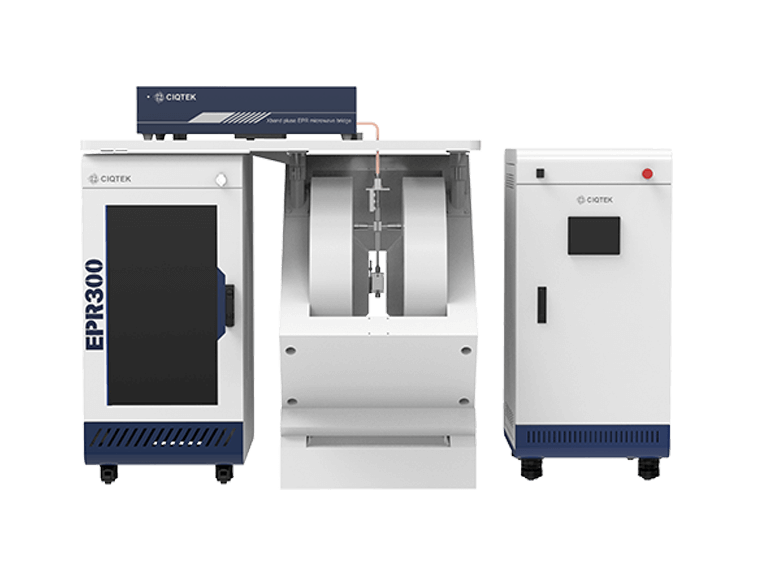
CIQTEK, a global leader in precision measurement and advanced scientific instrumentation, announces that its EPR product line has reached a significant milestone: the 300th global delivery. The landmark 300th unit — a CIQTEK EPR300 Electron Paramagnetic Resonance (EPR) spectrometer — has been officially delivered to Vanderbilt University in the United States, underscoring the growing global adoption of CIQTEK's EPR technology.   CIQTEK EPR Team at the EPR300 Installation Site   Inside Vanderbilt University — CIQTEK's EPR Technology Supports Advanced Research Founded in 1873 and located in Nashville, Tennessee, Vanderbilt University is a world-renowned private research university recognized for its strong academic and research excellence in chemistry, materials science, biomedical engineering, and nanotechnology. The research group receiving the EPR300 — the 300th unit in the CIQTEK EPR series — is dedicated to cutting-edge investigations in bioinorganic chemistry and advanced molecular materials, demanding the highest standards in electron paramagnetic resonance technology. With its superior sensitivity and signal-to-noise ratio, the CIQTEK EPR300 provides the critical data foundation that drives the group’s advanced research forward. Performance That Speaks for Itself — Client Proactively Publishes Delivery News Following installation and commissioning, the EPR300's outstanding spectral quality and the professionalism of CIQTEK's engineering team exceeded the client’s expectations. The research group published a dedicated news article on its official platform, celebrating the installation and offering high praise for the EPR spectrometer. “The performance of the EPR300 has been truly impressive,” said Assistant Professor Mengshan Ye, a lead researcher in the group. “And the dedication and professionalism demonstrated by the installation engineers have given our entire team tremendous confidence.”   X-Band Continuous-Wave Electron Paramagnetic Resonance Spectrometer The EPR300 leverages a state-of-the-art microwave system and ultra-high-performance signal processing unit to push detection sensitivity and signal-to-noise ratio to unprecedented levels. Capable of precisely capturing and analyzing unpaired electron signals at extremely low spin concentrations, the EPR300 opens new methodological pathways for studying low-concentration free radicals and investigating the deep-level physical and chemical properties of metal ions and other microscopic systems. In addition, the EPR300 supports the upgrade to Q-band operation, enabling higher g-value resolution critical for detecting anisotropic samples. From life sciences and materials science to chemistry and physics, the EPR300 lays a robust experimental foundation for frontier research across multiple disciplines — empowering scientists to reach new milestones of discovery.   300 Deliveries and Counting ...
May 15, 2026
Conferências e Exposições
CONTATE-NOS

Contato

Principal

Deixe um recado

Deixe um recado
Não hesite em contactar-nos para mais detalhes, solicitar um orçamento ou agendar uma demonstração online! Responderemos assim que pudermos.
Enviar

Lar

Produtos

Bater papo

contato